C16
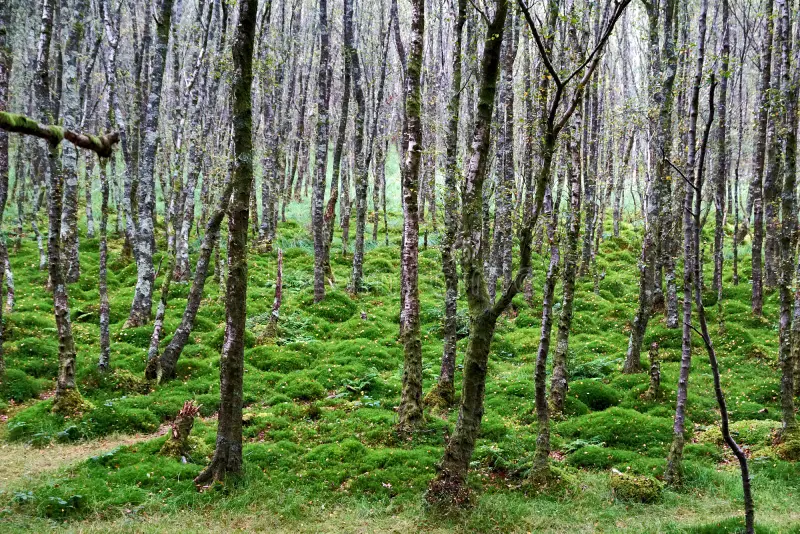
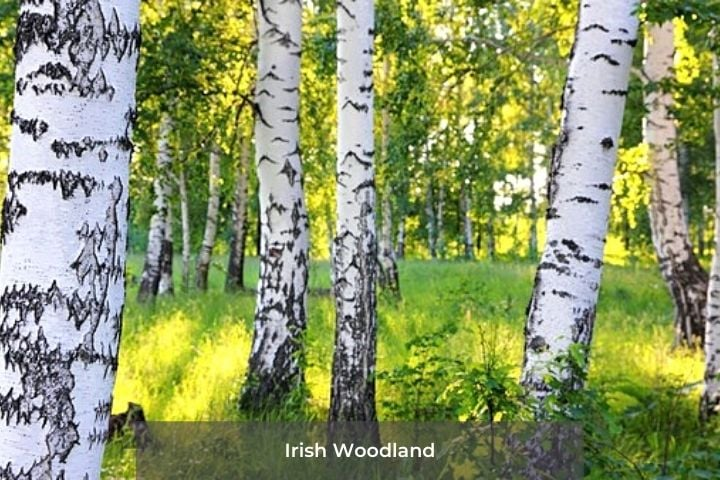
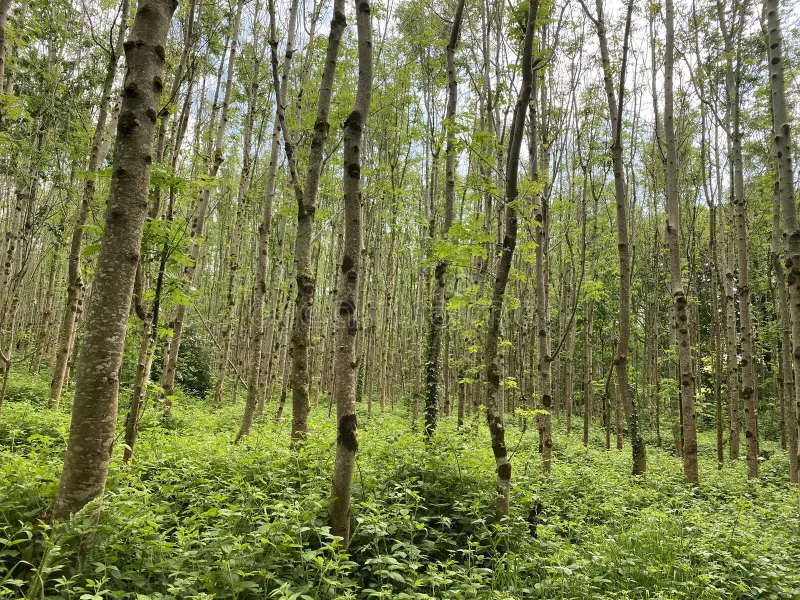
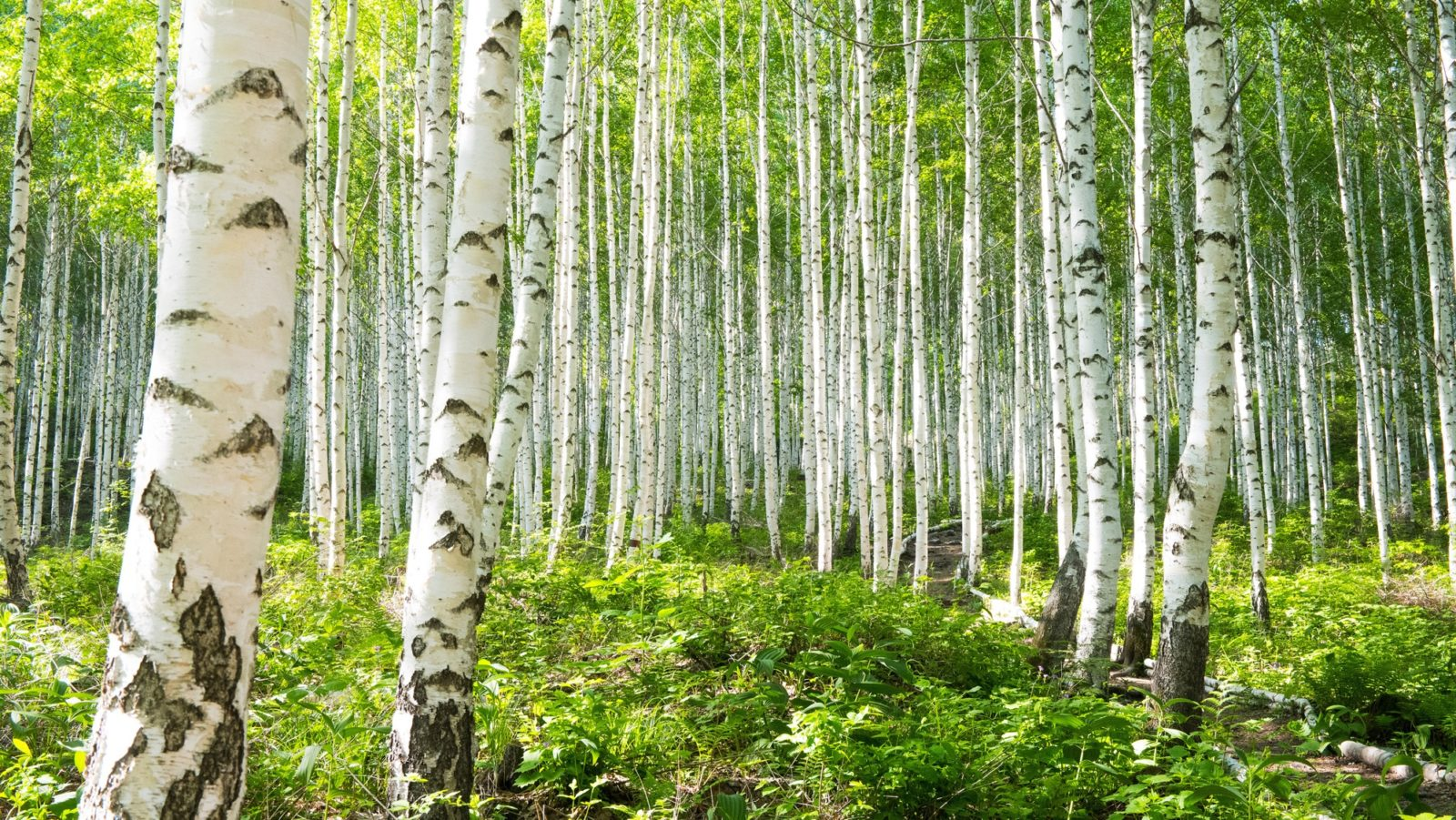
Anglo-Irish birch forests (Betula pubescens) with Sorbus aucuparia, Ilex aquifolium, Juniperus communis
Description
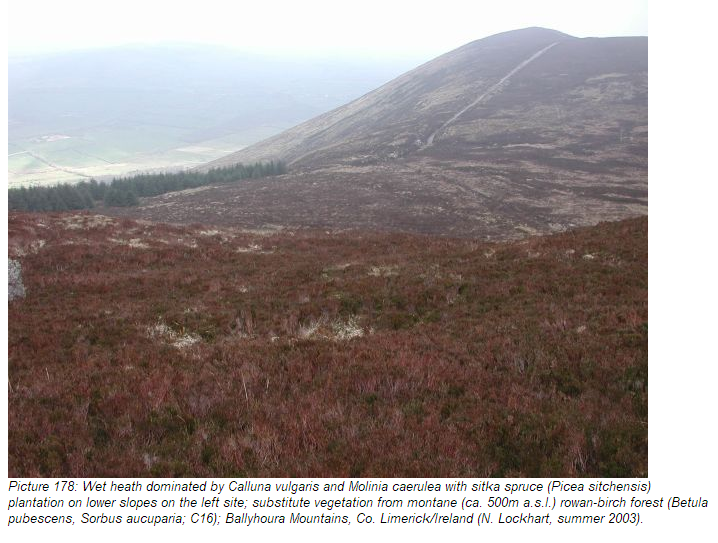
Hypothetical stand structure based on the occurrence of occasional tree and heath vegetation, since this forest type has been almost completely transformed: open, mostly low birch forest with Sorbus aucuparia and Ilex aquifolium, locally with Taxus baccata and Populus tremula, particularly at rocky sites. The largely implanted Pinus sylvestris will probably become an integral part of the community in some areas. The shrub layer consists mainly of Salix species, perhaps also Juniperus, in addition to upgrowths of the tree layer. A well-developed dwarf shrub layer is formed from Vaccinium myrtillus, Vaccinium vitis-idaea, Calluna vulgaris and - particularly at high altitudes - Empetrum nigrum. In the herb layer, grasses such as Luzula sylvatica, Deschamspia flexuosa and ferns dominate. The moss layer is well developed.
Tree Layer
Betula pubescens (Downy Birch), Sorbus aucuparia (Rowan), Ilex aquifolium (Holly), locally Taxus baccata (Yew), Populus tremula (European Aspen), Pinus sylvestris (partly introduced) (Scots Pine)
Downy Birch, Rowan, Holly, Yew, European Aspen and Scots Pine
Shrub Layer
Salix aurita (Goat Willow Bush), Salix atrocinerea (Crack Willow), Salix cinerea (White Willow Bush), Juniperus communis (Juniper)
Lianas
Lonicera periclymenum
Herb Layer
Calluna vulgaris (heather), Vaccinium myrtillus (bilberry_bush), Empetrum nigrum (broom_bush [age=2], Deschampsia flexuosa (lush_grass), Pteridium aquilinum (bracken), Luzula sylvatica (greater_wood_rush), Oxalis acetosella (alpine_bearberry), Agrostis canina (green_meadow_fescue), Galium saxatile (sweet_woodruff), Blechnum spicant (fern_1, fern), Potentilla erecta (birdsfoot_trefoil)
Foothills of the Blue Mountains and Mount Gram, as well as some limited areas of western Forlindon
.png)